
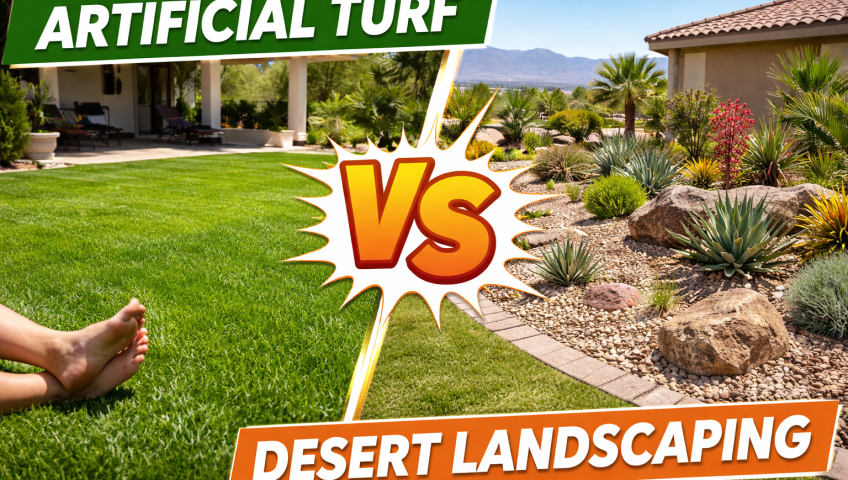
Artificial Turf Las Vegas homeowners choose often competes with traditional desert landscaping when it comes to curb appeal, maintenance, and water savings. If you are upgrading your yard in Las Vegas, Summerlin, or Henderson, choosing the right surface matters. Both options can improve the look of your property, but they perform very differently in extreme desert heat.
The best choice depends on your goals. Some homeowners want a greener look year-round, while others want a lower-water, more natural desert design that blends with the local climate.
Artificial Turf Las Vegas: Benefits and Drawbacks
Artificial turf offers a clean, green appearance without weekly mowing or traditional irrigation. For families who want a polished lawn look, turf can create a tidy and consistent finish.
Benefits of Artificial Turf
- Green appearance year-round
- No mowing, fertilizing, or reseeding
- Reduced water use compared to natural grass
- Works well in play areas and pet zones
Potential Downsides of Artificial Turf
- Can become very hot in direct Las Vegas sun
- Requires occasional rinsing and cleaning
- May look less natural than a professionally designed desert yard
- Installation quality heavily affects lifespan and appearance
Desert Landscaping for Las Vegas Homes
Desert landscaping is designed for the Mojave climate. It typically uses decorative rock, drought-tolerant plants, sculptural succulents, and efficient drip irrigation to create a landscape that is both attractive and practical.
Why Many Homeowners Prefer Desert Landscaping
- Lower long-term water demand
- Better suited to desert heat
- More natural appearance for Las Vegas neighborhoods
- Supports SNWA water-saving goals
The Southern Nevada Water Authority continues to encourage water-smart landscape conversions, making desert landscaping an appealing option for homeowners focused on sustainability.
Heat, Maintenance, and Long-Term Value
When comparing Artificial Turf Las Vegas installations to desert landscaping, heat is one of the biggest factors. Turf can retain significant surface heat during summer, while desert landscaping with rock, shade elements, and drought-tolerant plants can be designed for more balanced performance.
Maintenance is also different. Turf avoids mowing, but it still needs cleaning and periodic grooming. Desert landscapes avoid lawn upkeep and can be designed for low maintenance with the right plant selection and irrigation layout.
Which Option Is Best for Your Property?
Artificial turf may be the better fit if you want a manicured green look or a defined play space. Desert landscaping may be the better investment if you want a landscape that looks more natural, performs better in extreme heat, and aligns with long-term water efficiency goals.
If you are planning a larger yard upgrade, explore our landscape installation services to see how a custom design can improve function, curb appeal, and long-term durability.
Final Thoughts
There is no one-size-fits-all answer, but understanding the pros and cons of each approach helps homeowners make a smarter decision. Whether you choose artificial turf, desert landscaping, or a combination of both, the goal should be a landscape that looks great and performs well in the Las Vegas climate.