
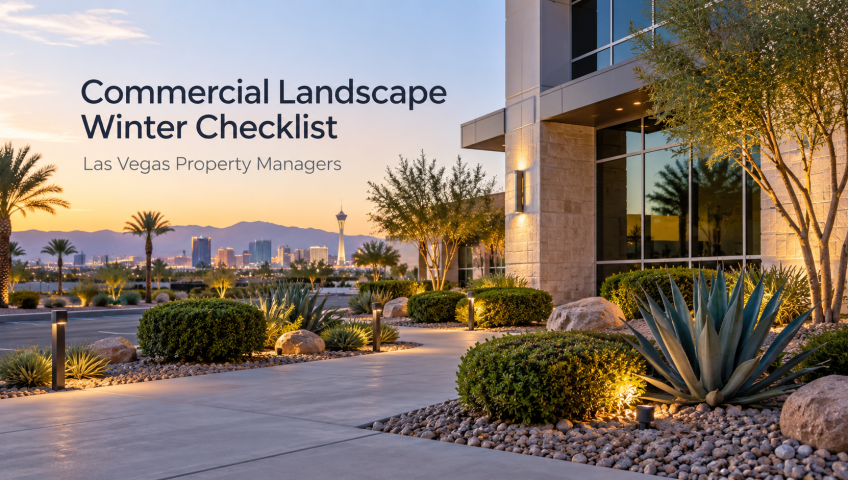
Commercial Landscape Maintenance in Las Vegas: What Property Managers Should Inspect Before Winter
A commercial landscape winter checklist in Las Vegas can help property managers identify irrigation problems, trip hazards, lighting failures, plant-health issues, and deferred maintenance before cooler weather arrives. Fall is one of the best times to inspect commercial landscapes because summer stress is still visible, winter watering requirements are approaching, and many repairs can be completed before holiday traffic and year-end property reviews.
For office parks, retail centers, apartment communities, HOAs, medical buildings, and other commercial properties, landscape maintenance is about more than appearance. A well-maintained exterior helps support curb appeal, tenant satisfaction, water efficiency, and property safety.
Chicago Landscape of Las Vegas provides professional commercial landscape maintenance and improvement services throughout Las Vegas and Henderson. The following checklist highlights the areas property managers should review before winter.
Why a Commercial Landscape Winter Checklist Matters in Las Vegas
Las Vegas landscapes experience intense heat, prolonged sun exposure, seasonal wind, and heavy irrigation demand during summer. By fall, these conditions often reveal weaknesses that may have developed gradually throughout the year.
Waiting until winter to address problems can lead to higher repair costs, damaged plants, water waste, dark walkways, and poor first impressions for tenants and visitors. A proactive inspection allows property managers to prioritize repairs and budget for improvements before small issues become larger ones.
1. Inspect Irrigation for Leaks, Overspray and Poor Coverage
Irrigation should be one of the first items on every commercial landscape inspection. Even a small leak can waste significant amounts of water when it continues across multiple watering cycles.
Run each irrigation zone and look for:
- Broken sprinkler heads
- Leaking valves
- Damaged drip tubing
- Clogged emitters
- Standing water around valve boxes
- Overspray onto sidewalks, walls and parking areas
- Dry areas indicating poor coverage
Beginning November 1, Southern Nevada’s winter sprinkler schedule limits watering to one assigned day per week. Property managers should verify controller programming before the seasonal change and confirm that all zones are operating efficiently.
For current seasonal watering guidance, review the Southern Nevada Water Authority watering schedule.
Chicago Landscape provides commercial irrigation repair and sprinkler services in Las Vegas for properties that need repairs, controller adjustments, or system upgrades.
2. Check Walkways and Hardscape for Trip Hazards
Commercial landscapes are used by employees, tenants, residents, customers, vendors, and delivery personnel every day. Uneven pavers, lifted edging, loose materials, and damaged walkways can create avoidable hazards.
Inspect:
- Paver walkways
- Entry paths
- Courtyard surfaces
- Parking-lot pedestrian routes
- Steps and transitions
- Retaining-wall edges
Any area that has shifted, settled, cracked, or become unstable should be evaluated before winter traffic increases.
Chicago Landscape’s article on landscaping as a liability reducer explains how thoughtful landscape design and maintenance can help reduce property risk.
3. Test Landscape and Path Lighting
Shorter days make exterior lighting more important during fall and winter. Burned-out fixtures, damaged wiring, incorrect timer settings, or poor coverage can create dark areas around walkways, parking lots, entrances, and common spaces.
A fall lighting inspection should include:
- Path lights
- Step lights
- Tree uplighting
- Entry lighting
- Wall-wash fixtures
- Timers and transformers
- Damaged or tilted fixtures
Properly designed LED landscape lighting improves both appearance and visibility. Learn more about commercial and residential landscape lighting in Las Vegas.
4. Evaluate Trees for Deadwood and Structural Problems
Commercial trees should be inspected for dead limbs, broken branches, weak attachments, excessive growth around buildings, and interference with signs or lighting.
Pay particular attention to trees near:
- Parking spaces
- Pedestrian walkways
- Building entrances
- Play areas
- Outdoor seating
- Signage
Removing hazardous material and correcting obvious structural problems can improve both appearance and safety before seasonal wind events.
5. Look for Plants Damaged by Summer Heat
By October, summer-related plant stress is usually easy to identify. Dead shrubs, scorched foliage, failed annuals, declining trees, and thinning groundcover can make a commercial property look neglected even when routine maintenance is being performed.
Fall is a good time to determine which plants are likely to recover and which should be replaced. When replacements are needed, drought-tolerant species selected for Southern Nevada can reduce future water demand while improving year-round appearance.
For properties considering larger improvements, Chicago Landscape also provides desert landscaping design and installation.
6. Clean Up Overgrown or Unmaintained Areas
Commercial landscapes can quickly lose their polished appearance when planting beds become overgrown, weeds accumulate, or debris collects around shrubs and walls.
A seasonal cleanup should address:
- Weeds
- Dead plant material
- Leaf buildup
- Unwanted volunteer growth
- Overgrown shrubs
- Debris in decorative rock
- Plant growth blocking signs or lighting
Routine cleanup improves curb appeal while making it easier to spot irrigation leaks, damaged plants, and other maintenance concerns.
7. Review Landscape Rock, Edging and Groundcover
Decorative rock can migrate over time, especially near sidewalks, parking lots, slopes, and drainage areas. Bare spots, displaced rock, or deteriorated edging can make a property look unfinished and create cleanup issues.
Inspect rock depth and distribution, especially around high-traffic areas. Replenishing material where needed can quickly improve appearance without requiring a full landscape renovation.
8. Inspect Drainage Before Winter Storms
Although Las Vegas is dry for much of the year, sudden storms can expose drainage problems quickly. Fall is a good time to inspect low areas, downspout discharge points, swales, and hardscape transitions.
Look for signs of:
- Standing water
- Erosion
- Washed-out landscape rock
- Water entering planting beds improperly
- Drainage toward buildings
Proper grading and drainage help protect landscape improvements and surrounding structures. Chicago Landscape provides grading and drainage services in Las Vegas for properties with recurring drainage concerns.
9. Review Seasonal Color and Entry Appearance
Commercial entrances create the first impression for customers, tenants, residents, and visitors. Fall is an excellent time to review whether entry landscaping still presents the image the property owner wants.
Consider:
- Seasonal color
- Plant symmetry
- Sign visibility
- Lighting
- Clean edging
- Decorative rock condition
- Dead or declining plants
Small improvements at entrances can have an outsized impact on the appearance of the entire property.
10. Check Irrigation Controllers and Seasonal Programming
Commercial properties often have multiple irrigation zones, controllers, and landscape types. That makes seasonal programming especially important.
Controllers should be reviewed for:
- Correct watering days
- Appropriate run times
- Seasonal adjustments
- Rain or weather sensor operation
- Zones that no longer need irrigation
- Programs left active after landscape changes
If the property still uses older fixed-schedule timers, a smart irrigation controller may provide better oversight and easier seasonal management.
11. Review Areas Where Landscaping Has Changed
Commercial landscapes evolve. Turf may have been removed, trees mature, planting beds change, and hardscape or artificial turf may be added. Irrigation and maintenance programs should evolve with those changes.
If the same maintenance plan has been used for years without reassessment, the property may be spending money on services or irrigation that no longer match current conditions.
12. Document Problems Before Budget Planning
Property managers should photograph and document issues discovered during the inspection. This creates a useful record for budgeting, vendor discussions, HOA boards, ownership groups, and capital improvement planning.
Separating immediate repairs from longer-term improvements can help prioritize spending:
- Immediate: leaks, trip hazards, dark walkways, broken branches
- Near-term: plant replacement, rock replenishment, irrigation upgrades
- Long-term: landscape redesign, turf conversion, major hardscape improvements
Commercial Landscape Winter Checklist for Las Vegas Property Managers
- Run and inspect every irrigation zone
- Update controllers for winter watering restrictions
- Repair leaks and eliminate overspray
- Inspect walkways and pavers for trip hazards
- Test all landscape lighting
- Evaluate trees for dead or damaged branches
- Identify summer-damaged plants
- Clean planting beds and decorative rock
- Inspect drainage and erosion areas
- Refresh high-visibility entrances
- Document repairs and future improvements
Using a consistent commercial landscape winter checklist in Las Vegas helps property managers maintain a cleaner, safer, and more efficient exterior while reducing the chance that seasonal issues are overlooked.
Frequently Asked Questions
How often should a commercial landscape be professionally inspected?
Routine maintenance should be ongoing, but a more comprehensive inspection at seasonal transitions is valuable for identifying irrigation, plant-health, lighting, drainage, and hardscape issues.
Why is fall a good time for commercial landscape maintenance?
Summer stress is easier to identify, temperatures are more comfortable for repairs and planting, and properties can be prepared for winter watering restrictions and shorter daylight hours.
Can commercial irrigation be upgraded without redesigning the whole landscape?
Yes. Controllers, valves, drip lines, sprinkler heads, and selected zones can often be improved independently. The right approach depends on the age and condition of the existing system.
Does Chicago Landscape provide commercial landscape maintenance?
Yes. Chicago Landscape of Las Vegas provides commercial landscape maintenance services for qualifying properties throughout Las Vegas and Henderson.
Schedule a FREE Commercial Landscape Consultation
If your property needs seasonal maintenance, irrigation repairs, lighting improvements, landscape cleanup, or a broader commercial landscape evaluation, Chicago Landscape of Las Vegas can help.
Since 2012, our team has worked with commercial properties throughout Southern Nevada. Chicago Landscape is an A+ BBB Rated, Licensed & Insured Nevada C-10 Landscaping Contractor and an SNWA Water Smart Contractor.
We offer FREE on-site commercial landscape consultations throughout Las Vegas and Henderson. Our team can inspect your property, identify maintenance concerns, and recommend practical improvements based on your priorities and budget.
Contact Chicago Landscape of Las Vegas today to schedule your FREE on-site commercial landscape consultation.
Want More Las Vegas Landscaping Tips?
Add Chicago Landscape of Las Vegas as a Preferred Source on Google to see more of our local landscaping guides, project updates, and expertise in Search and AI results.